The seeding names the champion, not the quarter-finalists
The top four seeds have won 25 of the 27 men's Slams since 2020, yet a third of the top eight still leave in the first week.

- Published
- Data as of
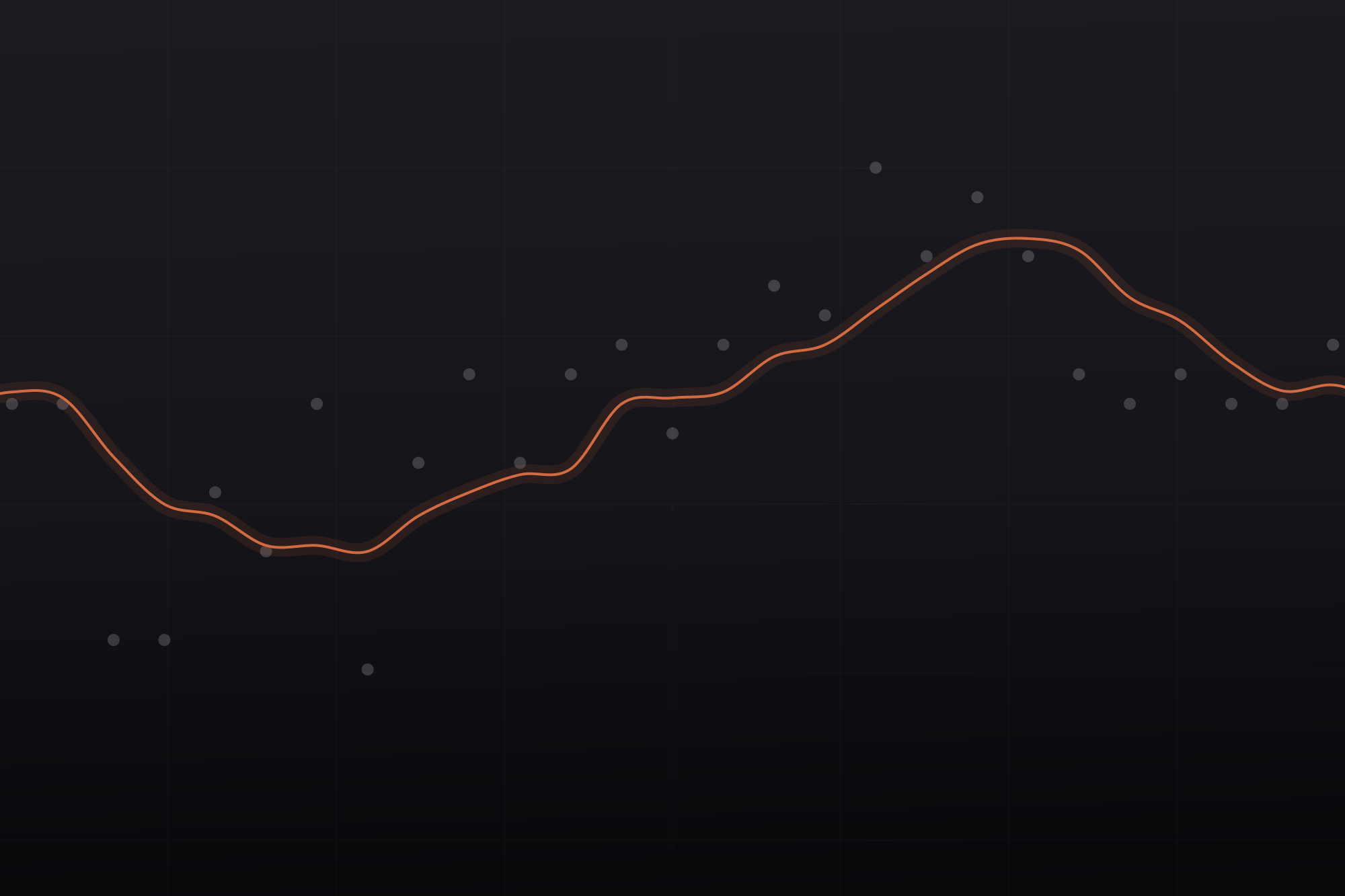
A Grand Slam seeding tells you who lifts the trophy far more often than it tells you who reaches the second week. Since 1990 the No. 1 seed has won one men's title in three, and since 2020 the top four seeds have taken almost every title going. Yet a third of the top eight seeds still lose before the fourth round, and they do so more often now than in the 2010s.
The title
The top seed wins one Grand Slam in three, 37% of the men's titles since 1990. His share has grown. Barely one in four in the 1990s became better than four in ten in the 2010s, and it has held there since.
The top four seeds have taken almost every title. They won six Slams in ten in the 1990s and 93% since 2020. Every champion of this decade has carried a seeding between 1 and 8.
One rule change sits under the chart. Until Roland Garros 2001 the majors seeded sixteen players; Wimbledon that summer was the first Slam with 32 seeds, so a player ranked 20th in the 1990s counts as unseeded here. The top-eight measures below are untouched.
The first week
A third of the top eight seeds lose before the fourth round, 33.3% of those who took the court since 1990. More than four in ten went out early in the 1990s and roughly one in five in the 2010s. Since 2020 the share has climbed back towards a third.
The four tournaments do not move together. Roland Garros swung furthest, from more than half of its top-8 seeds out early in the 1990s to barely one in nine in the 2010s, and back to a third since. Wimbledon stayed the least predictable: at least three top-8 seeds in ten have lost early there in every decade.
The quarter-finals
The top eight seeds cannot meet before the quarter-finals, so the last eight are the plainest test of the draw. In the 1990s an average of three and a half of them were top-8 seeds; since 2020 it is a little over four.
All eight have never arrived together. Seven is the record, reached seven times and most recently at the 2026 Australian Open. The chart marks the extremes: 2002 was the wildest year and 2012 the calmest.
Seed against seed
When two seeds meet, the higher one wins seven matches in ten. Finals between two seeds are closer affairs, and there he wins two in three. The rate has risen since the 1990s, partly for a counting reason: the 32-seed format pits top seeds against players seeded in the twenties, matches the 16-seed era counted as seed against unseeded.
Four unseeded champions
Four men have won a major since 1990 unseeded, none in the last twenty-two years; the table names them. Only Andre Agassi would be seeded under today's rule; he was ranked 20th at the 1994 US Open. Goran Ivanišević won Wimbledon 2001 ranked 125th and on a wild card.
The numbers
| Measure | Value | Basis |
|---|---|---|
| No. 1 seed won | 37% | 54 of 147 |
| No. 1 seed won, 1990s | 27.5% | 11 of 40 |
| No. 1 seed won, 2000s | 37.5% | 15 of 40 |
| No. 1 seed won, 2010s | 42.5% | 17 of 40 |
| No. 1 seed won, 2020–26 | 40.7% | 11 of 27 |
| Top-4 seed won, 1990s | 60% | 24 of 40 |
| Top-4 seed won, 2010s | 85% | 34 of 40 |
| Top-4 seed won, 2020–26 | 93% | 25 of 27 |
| Top-8 seeds in the quarter-finals, 1990s | 3.5 of 8 | 141 in 40 editions |
| Top-8 seeds in the quarter-finals, 2020–26 | 4.3 of 8 | 116 in 27 editions |
| Top-8 seeds in the quarter-finals, lowest yearly mean | 1.75 of 8 | 2002, four editions |
| Top-8 seeds in the quarter-finals, highest yearly mean | 6 of 8 | 2012, four editions |
| Top-8 seeds out before the fourth round | 33.3% | 383 of 1,149 |
| Top-8 early exits, 1990s | 42.7% | 131 of 307 |
| Top-8 early exits, 2000s | 37.2% | 116 of 312 |
| Top-8 early exits, 2010s | 21.8% | 69 of 317 |
| Top-8 early exits, 2020–26 | 31.5% | 67 of 213 |
| Higher seed won, seed v seed | 71.3% | 1,337 of 1,875 |
| Higher seed won, seed v seed, 1990s | 66.7% | 142 of 213 |
| Higher seed won, seed v seed, 2020–26 | 73.1% | 293 of 401 |
| Higher seed won, all-seeded finals | 66.4% | 85 of 128 |
| Seed v seed matches added by the 2024 seed repair | 4 | of 1,875 |
| Unseeded champion | Andre Agassi | US Open 1994, ranked 20th |
| Unseeded champion | Gustavo Kuerten | Roland Garros 1997, ranked 66th |
| Unseeded champion | Goran Ivanišević | Wimbledon 2001, ranked 125th |
| Unseeded champion | Gastón Gaudio | Roland Garros 2004, ranked 44th |
How the counting was done
The figures cover every men's main-draw match at the four majors from the 1990 Australian Open to the 2026 US Open, 147 editions from the TennisMyLife match database. Wimbledon 2020 was not played. The women's draws are left out; the source's WTA files carry less reliable player identifiers.
A seed who withdrew before his first match stays in the quarter-final counts and leaves the early-exit denominator; that is why 1,149 top-8 seeds played rather than 1,176. The No. 1 seed was absent four times and those editions stay in his count.
Three of the 2024 files leave the seed field blank in some rows. The notebook fills the gap from other rows of the same event and, for six seeds no row carried, from the ranking list checked against the published seedings. None was a top-8 seed; the repair adds four seed-against-seed matches and nothing else.
What the data cannot say
Everything here describes what happened to a seed line, not to a player. Nothing measures the opponent, the injury or the form that decided a match, and none of it is a probability for a draw to come. The decades show the draw growing more predictable through the 2010s; they cannot say who or what did it.
A reading
The draw was at its most predictable in the 2010s, the decade at the heart of the 24 years in which at least one of Federer, Nadal and Djokovic stood in the top 10. Title share, quarter-final count and early exits all moved the same way. That the three of them caused it is consistent with the data, not proven by it; the 32-seed format arrived in the same period.
Since 2020 the top has stayed as concentrated as ever while the layer beneath has loosened. The seeding still names the champion from a short list of four; it has stopped saying who plays in the second week. How well the betting market does the same job, match by match, is measured in another numbers piece.
Sources
Material claims in this article are supported by the following sources.
- 01TennisMyLife · Tennis Match Database (1967–2026): ATP main-draw, Challenger and qualifying results with serve statistics, rankings at match time, seeds and the indoor flag; WTA results from 1990 (MIT licence per the page's dataset metadata; data collected from the ATP website and other public sources)retrieved
- 02Wikipedia · 2001 Wimbledon Championships – Men's singlesretrieved
- 03Tennis Majors · July 9, 2001: The day Goran Ivanisevic finally won Wimbledonretrieved
Data and method
- Datasets
- Data as of
- Method
- The notebook is in the FifthSet repository under
analysis/2026-09-25-seeds-at-the-slams/notebook.ts.
Related reading
The favourite loses nearly one tennis match in three
Over 178,275 matches since 2022 the betting favourite lost 31.2% of the time, a 90% favourite about once in 23. The pattern holds from the Grand Slams to ITF level.
